This is going around the interwebs today:
The Evolution of Girls' Halloween Costumes
I've made it a policy not to engage in debate with the friends of acquaintances, but when the friend of a friend commented on Facebook that feminism, secularism, and sex positivity were to blame for this phenomenon, I decided to come here to discuss the many ways she's wrong.
Patriarchy manifests itself differently in different cultures. In theocracies, it may come with the expectation that a woman remain completely modest in dress and behavior, norms that may or may not be enforced by law. In our capitalist society, however, patriarchy manifests as the idea that our bodies - and our sexualities - are commodities to be bought and sold, cheered on and exploited by the standards of the male gaze.
The common theme is that our bodies are not our own; they are controlled by a system of oppression, or sometimes even by another human being directly. Whether we're being forced to cover ourselves against our will or made to believe that our only worth comes in being sexy for another person's enjoyment, it's all patriarchy, and it's all intensely detrimental.
So the sexy costumes. I have friends who enjoy them immensely. But you know what? They're grown adults who have chosen - though likely through a lifetime of socialization - to don very skimpy outfits on Halloween, at parties, etc. Most of them wouldn't be caught dead in a Halloween store's $10 faux corset, but at a glance their wardrobe choices appear similar to the costumes I tend to roll my eyes at. Which is to say, I don't exactly cheer on the practice, but I do respect it as a means of self-expression, a reflection of our patriarchal society though it may be.
It gets hairy when you start parsing "choice" and "autonomy" with the knowledge that we do not exist in a vacuum, that all our behaviors and choices are influenced by the way we've been brought up. But what we can probably all agree on is that the availability of these ever-shrinking costumes - and the disappearance of other options - pollutes the minds of girls from a very early age. If from a young age a girl consistently sees nothing but outfits that highlight her chest and fall far above her knee, how can we even begin to hope that she will be able to express her sexuality autonomously as an adult?
Make no mistakes... the sexualization of young girls is not the result of feminism, secularism, or sex positivity (ideals that all deem autonomous decision making and healthy sexuality of high value). No, childhood sexualization comes, not surprisingly, from our culture's version of patriarchy: a capitalist view that sees bodies as objects to be bought and sold.
Wednesday, October 10, 2012

Friday, September 21, 2012
Waiting Till The Wedding Night, Helpfully Explained By The Bluth Family
Inspired by Jezebel's GIF parade to explain the recent Fox News "opinion" piece on waiting until marriage, I present to you...


Waiting Till The Wedding Night - Getting Married The Right Way
Helpfully Explained by the Bluth Family
Helpfully Explained by the Bluth Family
As anyone who’s read my abstinence column here at Fox News Opinion could guess, my wedding is something that I’ve looked forward to for quite some time. After having tied the knot at the end of August, I can now say beyond all shadow of a doubt, that it was everything I’d hoped and prayed that it would be since childhood. (I’d also prayed to be bitten by a radioactive spider and develop sticky hands, but… I was an idiot.)
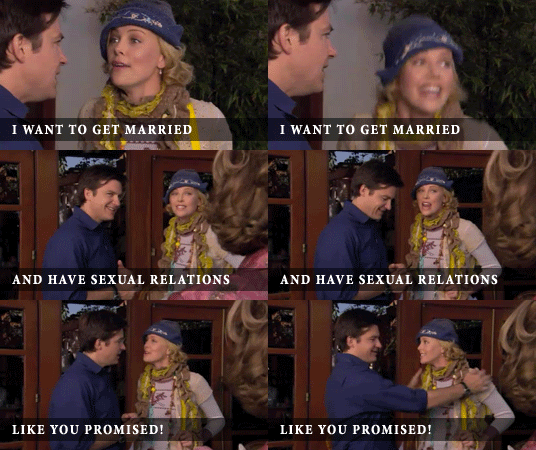
Let me preface this column by saying this: my wife (I have to get used to saying that) and I not only waited sexually in every way (no, we didn’t pull the Bill Clinton and technically avoid “sex” sex,)...
...but we didn’t shack up as live-ins and most importantly, we courted each other in a way that was consistent with our publicly professed values.

We did it right.

Feeling judged? I couldn’t care less. You know why? Because my wife and I were judged all throughout our relationship. People laughed, scoffed and poked fun at the young, celibate, naive Christian couple.

We’d certainly never make it to the wedding without schtupping, and if we did, our “wedding night would be awkward and terrible,” they said.
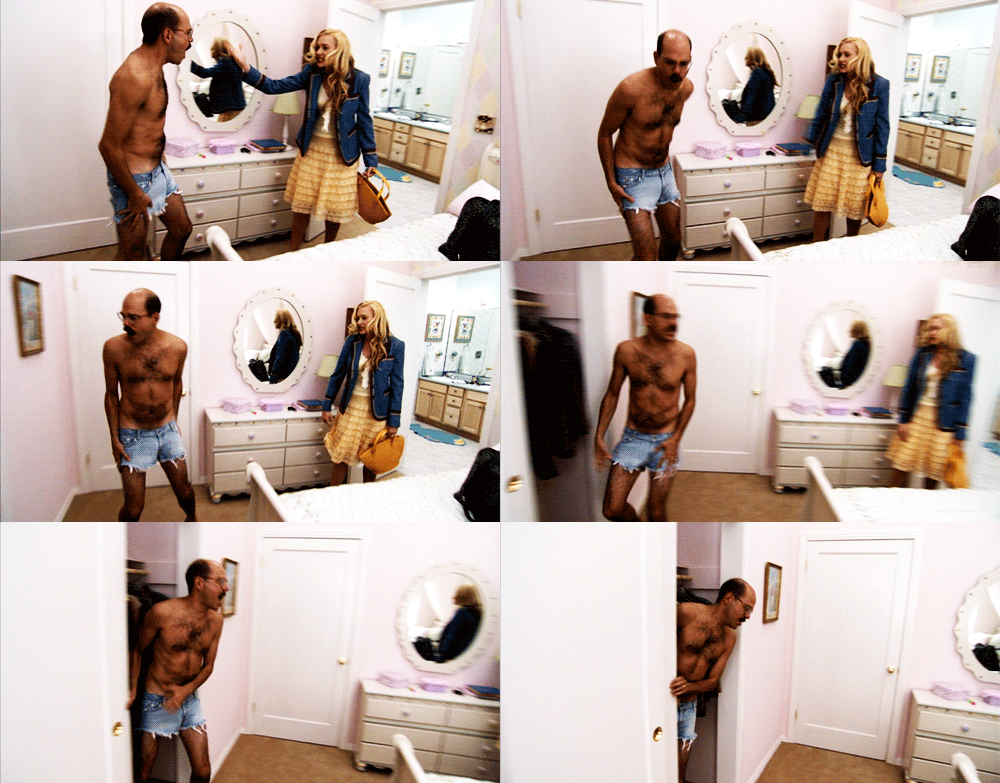
Turns out that people couldn’t have been more wrong. Looking back, I think that the women saying those things felt like the floozies they ultimately were, and the men, with their fickle manhood tied to their pathetic sexual conquests, felt threatened.
I think it’s important to write this column not to gloat (though I’ll be glad to), but to speak up for all of the young couples that have also done things the right way. When people do marriage right, they don’t complain so much, and so their voices are silenced by the rabble of promiscuous charlatans, peddling their pathetic world view as “progressive.”
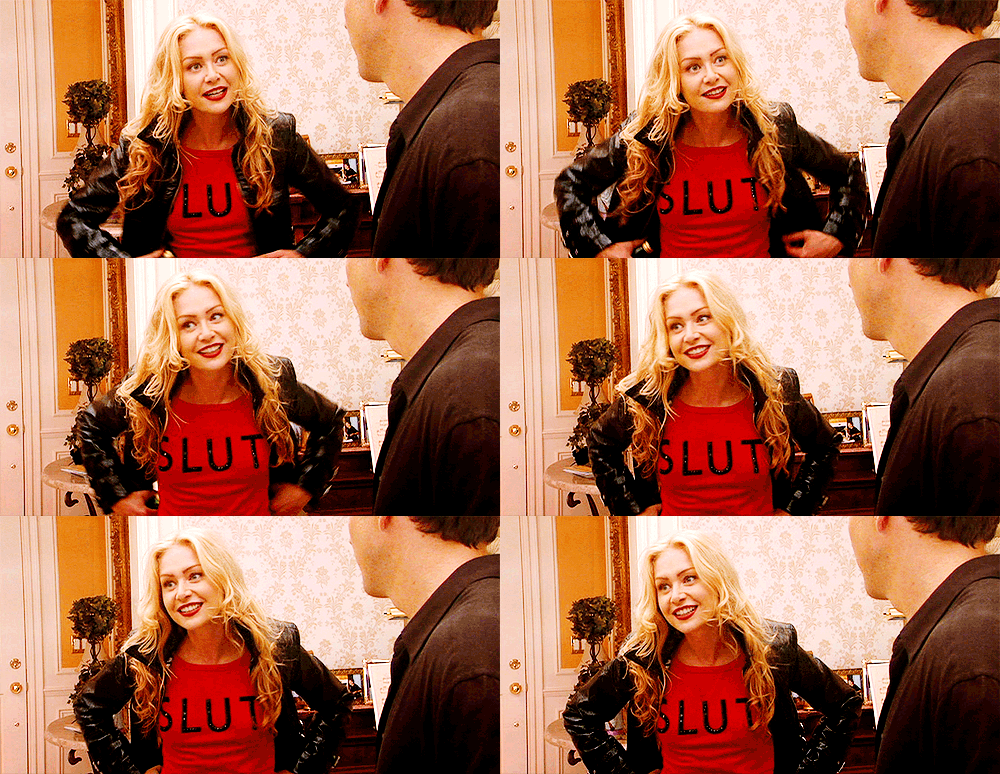
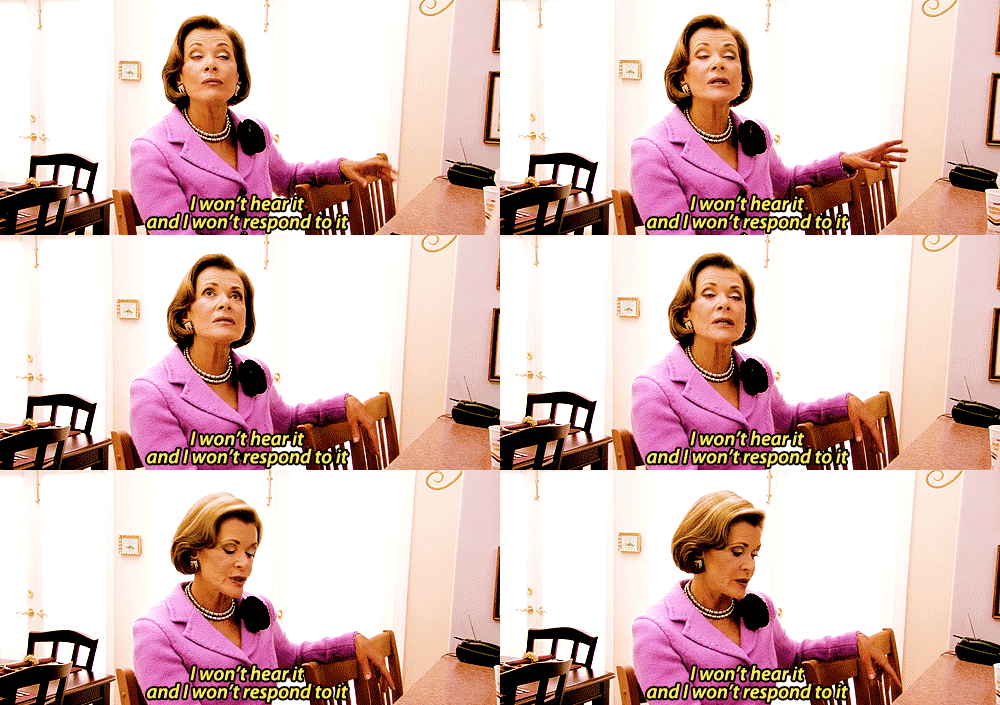
Our wedding was perfect.
Our wedding night was nothing short of amazing.


I write this on a plane heading into a tropical paradise with the most beautiful woman to have walked the planet earth. I know everybody says that their bride was the “most beautiful in the world.” They’re wrong. I win.
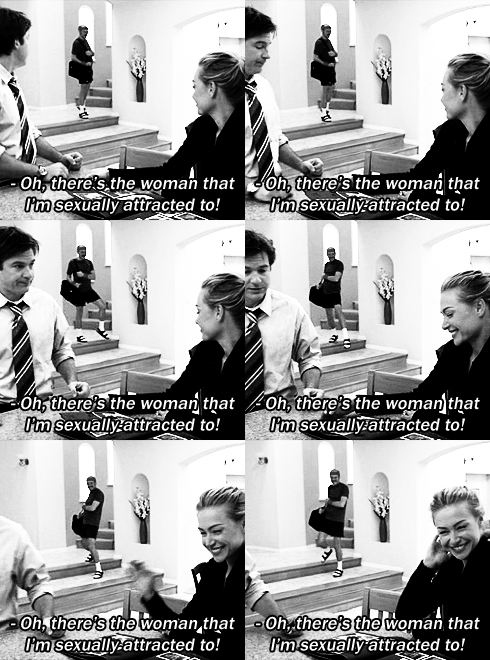
I’d like to tell you a story of our morning after, however. One that transpired into one of the most glaring epiphanies I’d ever had.

As my wife (again, still not used to that) and I ate breakfast at a local inn, we discussed how excited we were to start the rest of our lives together, how scary it was that everything was now so different. At the same time, we overheard the table next to us discussing their very own wedding from the night prior. What a coincidence!
“The thing is, nothing’s really changed,” the bride said.
Puzzled, my wife asked, “Did you get married last night too? So did we!”
“Congratulations!” the other dame said. “Yeah we did, just last night.”
“Where’s the groom?” my wife innocently… scratch that, naively asked.
“Oh, he’s sleeping. There was no way he was coming out with me this morning!” She paused and smirked. “Let’s just say that he’s got a lingering headache from a really good time last night.”

My heart sank. Firstly, that poor schmuck's “good time” was simply getting snookered. Not enjoying the company of close family and long-lost friends with a clear head and clean conscience, not staring in awe at his beautiful new wife, wanting to soak in every glimmer of her eyes as she shot him heart-racing looks from across the dance floor, not taking all of the cheesy pictures as they cut the cake, not even carrying her across that suite threshold as they nervously anticipated their “nightcap.”
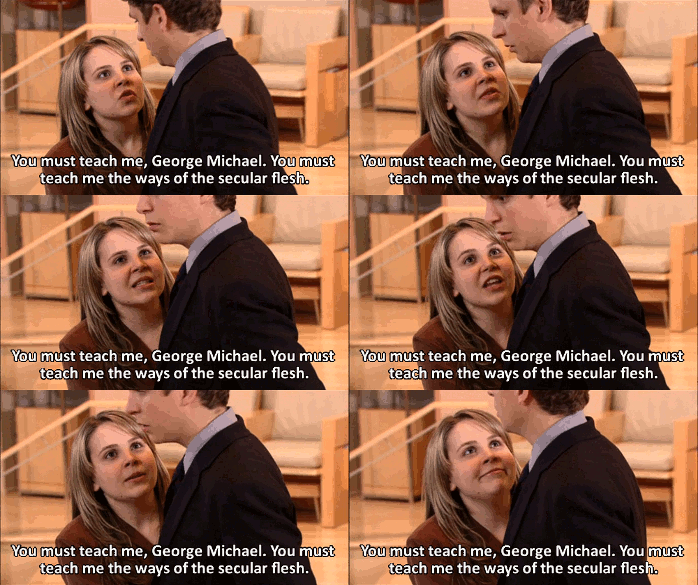
He probably won’t remember any of it. Instead, he got smashed. He was “that guy”… at his own freaking wedding.
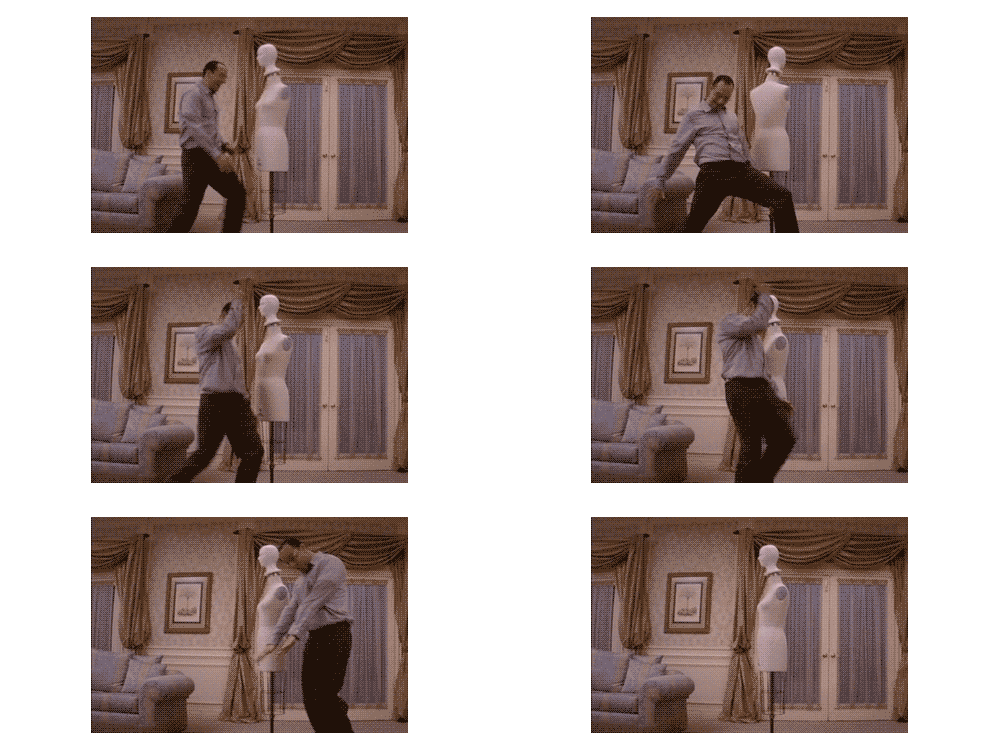
Then I realized something. Our wedding was truly a once in a lifetime event. It was a God’s-honest celebration of two completely separate lives now becoming one. Physically, emotionally, financially and spiritually, everything that made us who we were individually was becoming what bonded us together. Our family traveled from far and wide to celebrate the decision of two young people to truly commit themselves to each other, and selflessly give themselves to one another in a way that they never had before that very night.
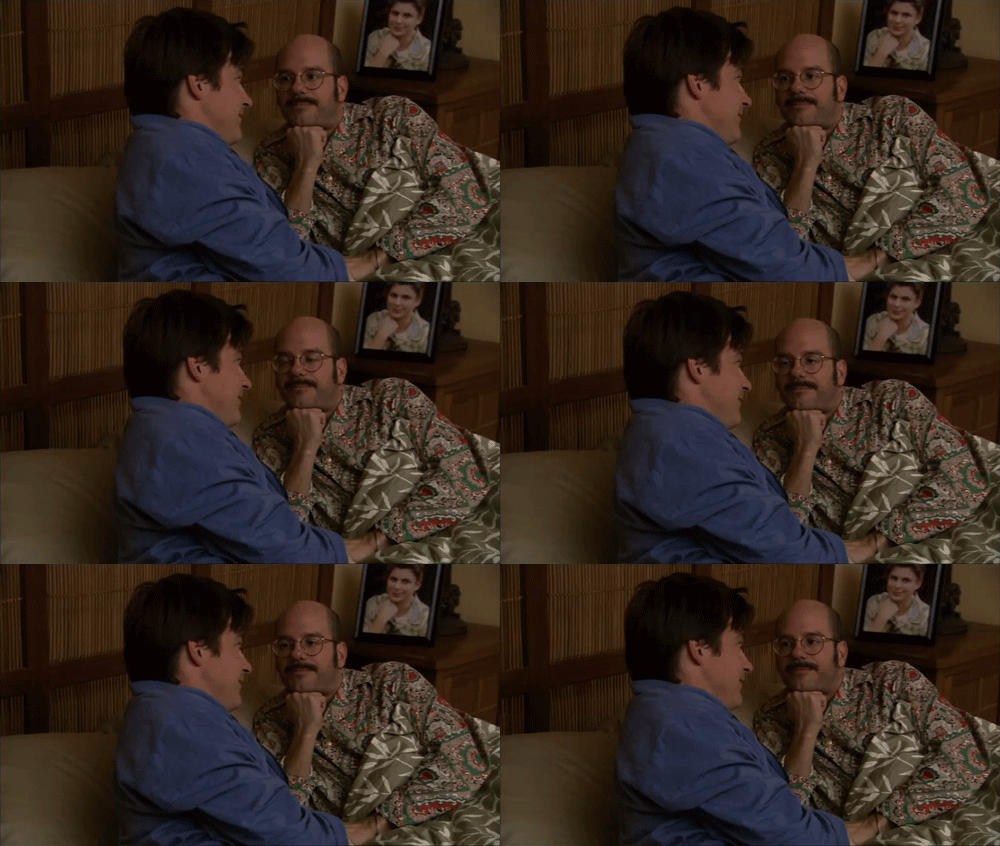
The people next to us that morning? Well, theirs was just one big party. And the morning after? Just another hangover.

Our “weddings” were the same event in name only. They know it, and we know it.

Do yours the right way. If you’re young and wondering whether you should wait, whether you should just give in, become a live-in harlot/mimbo and do it the world’s way.
If you’re wondering whether all of the mocking, the ridicule, the incredible difficulty of saving yourself for your spouse is worth it, let me tell you without a doubt that it is. Your wedding can be the most memorable day and night of your life… or just another party.


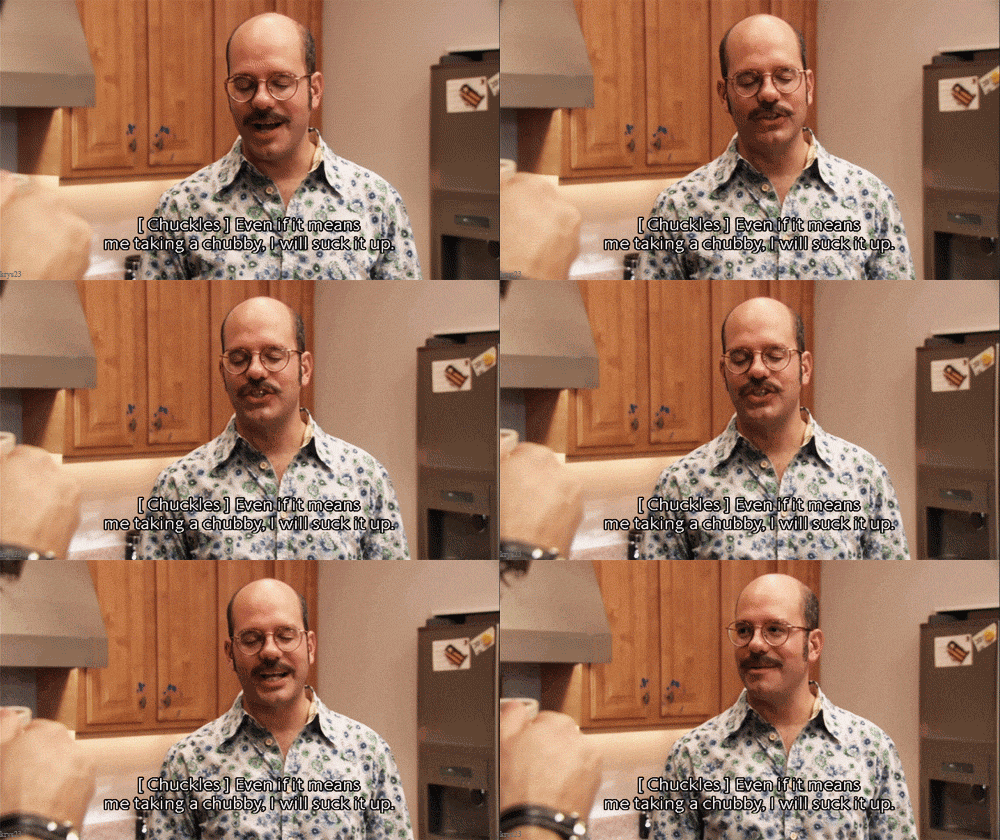
Oops. Did I just make a “judgment?” You’re darn right I did.

Thursday, September 20, 2012
The Waiters
So this came to my attention today.
Okay, for the record, being sex positive means not judging people for their sexual tastes and practices. And that includes not judging folks who, how to put this, "wait" until they're married to do the deed. I certainly don't judge the author of the above article for his relationship choices, despite the fact that he probably thinks I do. Don't get me wrong, I think it's a way outdated concept riddled with oppressive societal norms, but as a friend of mine likes to say, "If abstinence is your fetish, who am I to judge?"
The issue I have with "The Waiters" is that they're so fucking high and mighty about it. They think that the rest of us - the slutty promiscuous sinners who surely will never find true happiness because we just "give it away" to anything that moves - actually want the same things but just don't have the strength or moral integrity to "do things right."
WHICH IS PATHETIC. It's a dream world. I never harbored some uber-sanctified idea of my "virginity." I don't believe "virginity" is even a real physiological state; to me, it's a social construct kept locked up behind a facade of bunk science and poor understanding of reproductive anatomy. And again, if you want to place value on the concept of virginity, then by all means. That's your business. But don't start pulling information from a 19th century textbook to tell me that all women bleed like a slaughtered pig the first time they have intercourse.
So no, I never saw much value in waiting until marriage, in the concept of my supposed "virginity." Does that mean I don't respect myself or my body? Have poor self esteem? Need to "give it up" to keep a man around? Hardly. Let's look at the facts: I have never had sex with someone because I needed to be validated. The only time I've ever had sex under any kind of pressure that surpassed my own autonomy was in a bad relationship that needed to end (a married relationship, at that).
Bad relationship drama aside, I have remained very sexually autonomous in a world that would love to see me otherwise. To start, I was very well educated, mostly by my private (but not religious) school which actually taught comprehensive sex education. The first time I had sex, I was just a few days shy of 17. My boyfriend and I talked it over, we evolved to a place where becoming sexual with one another was something we were both comfortable with, and oh yeah, WE USED PROTECTION. And you know what? I don't regret a thing.
I understand that I'm treading into becoming high and mighty myself, so I want to interject here that I am not trying victim blame. I understand that sexual relationships are far too often entered into for unhealthy reasons, and I believe good, moral people fall into the traps set by a system of inequality between the sexes. So let me say this: anyone who manipulates someone else into having sex with them is a stain upon the wonderful world of human sexuality. The people who fall for it are generally socialized to do so by a system of capitalist patriarchy, which teaches us (particularly those of us with girl parts) that sex is a commodity to be bought and sold while simultaneously shaming us for taking part in it. (Consequently, this is the same system that the aforementioned author likely aligns himself with... food for thought.)
But back to the article. "Oh, we're so much better than that woman who's husband is sleeping it off because we actually feel different today!" You ever stop to think that maybe that couple doesn't want your life? That they don't want your marriage? That they simply didn't perceive their wedding to be this sudden, life-altering event, but rather a wonderful milestone in an already-evolving relationship?
Naw, they wanted to wait, to not live together first. They just fell to temptation. They're weak. Their morals are in shambles. Your way is so much better.
Fuck your understanding of morals. Morality isn't something you abide by just because some centuries-old book tells you to. Morality is something you have internalized for yourself, and even if it does come from a religious influence, you've still internalized it for personal reasons. I'm a very moral person, but for a number of reasons I could never internalize the kind of morality that your religion pushes. However, I do have extremely clear guidelines for how I handle everything from conflict to sexuality, and I very rarely waiver on any of it. One of my favorite morals is non-judgment. As I've said, I don't judge The Waiters. That's their business. But I have a very clear moral duty to call them out on their bullshit when I see them doing harm by passing moral judgment on others.
"Oh, but marriage is just the way to go." Right, because sexual relationships are always great if you're married. People never use sex to manipulate their partners in a marriage. A married man never rapes or sexually assaults his wife. All relationship problems would just magically be solved if everyone would just get married.
Whatever. I hope he and his wife enjoy a long and happy life in whatever alternate reality they currently reside in.
Enough ranting and cursing for now... Jezebel makes it better with all the hilarious GIFs.
Okay, for the record, being sex positive means not judging people for their sexual tastes and practices. And that includes not judging folks who, how to put this, "wait" until they're married to do the deed. I certainly don't judge the author of the above article for his relationship choices, despite the fact that he probably thinks I do. Don't get me wrong, I think it's a way outdated concept riddled with oppressive societal norms, but as a friend of mine likes to say, "If abstinence is your fetish, who am I to judge?"
The issue I have with "The Waiters" is that they're so fucking high and mighty about it. They think that the rest of us - the slutty promiscuous sinners who surely will never find true happiness because we just "give it away" to anything that moves - actually want the same things but just don't have the strength or moral integrity to "do things right."
WHICH IS PATHETIC. It's a dream world. I never harbored some uber-sanctified idea of my "virginity." I don't believe "virginity" is even a real physiological state; to me, it's a social construct kept locked up behind a facade of bunk science and poor understanding of reproductive anatomy. And again, if you want to place value on the concept of virginity, then by all means. That's your business. But don't start pulling information from a 19th century textbook to tell me that all women bleed like a slaughtered pig the first time they have intercourse.
So no, I never saw much value in waiting until marriage, in the concept of my supposed "virginity." Does that mean I don't respect myself or my body? Have poor self esteem? Need to "give it up" to keep a man around? Hardly. Let's look at the facts: I have never had sex with someone because I needed to be validated. The only time I've ever had sex under any kind of pressure that surpassed my own autonomy was in a bad relationship that needed to end (a married relationship, at that).
Bad relationship drama aside, I have remained very sexually autonomous in a world that would love to see me otherwise. To start, I was very well educated, mostly by my private (but not religious) school which actually taught comprehensive sex education. The first time I had sex, I was just a few days shy of 17. My boyfriend and I talked it over, we evolved to a place where becoming sexual with one another was something we were both comfortable with, and oh yeah, WE USED PROTECTION. And you know what? I don't regret a thing.
I understand that I'm treading into becoming high and mighty myself, so I want to interject here that I am not trying victim blame. I understand that sexual relationships are far too often entered into for unhealthy reasons, and I believe good, moral people fall into the traps set by a system of inequality between the sexes. So let me say this: anyone who manipulates someone else into having sex with them is a stain upon the wonderful world of human sexuality. The people who fall for it are generally socialized to do so by a system of capitalist patriarchy, which teaches us (particularly those of us with girl parts) that sex is a commodity to be bought and sold while simultaneously shaming us for taking part in it. (Consequently, this is the same system that the aforementioned author likely aligns himself with... food for thought.)
But back to the article. "Oh, we're so much better than that woman who's husband is sleeping it off because we actually feel different today!" You ever stop to think that maybe that couple doesn't want your life? That they don't want your marriage? That they simply didn't perceive their wedding to be this sudden, life-altering event, but rather a wonderful milestone in an already-evolving relationship?
Naw, they wanted to wait, to not live together first. They just fell to temptation. They're weak. Their morals are in shambles. Your way is so much better.
Fuck your understanding of morals. Morality isn't something you abide by just because some centuries-old book tells you to. Morality is something you have internalized for yourself, and even if it does come from a religious influence, you've still internalized it for personal reasons. I'm a very moral person, but for a number of reasons I could never internalize the kind of morality that your religion pushes. However, I do have extremely clear guidelines for how I handle everything from conflict to sexuality, and I very rarely waiver on any of it. One of my favorite morals is non-judgment. As I've said, I don't judge The Waiters. That's their business. But I have a very clear moral duty to call them out on their bullshit when I see them doing harm by passing moral judgment on others.
"Oh, but marriage is just the way to go." Right, because sexual relationships are always great if you're married. People never use sex to manipulate their partners in a marriage. A married man never rapes or sexually assaults his wife. All relationship problems would just magically be solved if everyone would just get married.
Whatever. I hope he and his wife enjoy a long and happy life in whatever alternate reality they currently reside in.
Enough ranting and cursing for now... Jezebel makes it better with all the hilarious GIFs.
Monday, September 3, 2012
Newsflash: It's Not Unusual To Measure Pregnancy From Two Weeks Prior To Conception
The following is a cross-post from RHRealityCheck.org
------------------------
Dear Everyone,
Please stop referring to Arizona's new abortion ban as the "Pregnancy Begins Two Weeks Before Conception Act." It's an ill-informed statement and makes us all look like we don't know what we're talking about. Plus, it focuses on the wrong aspects of the bill.
 First of all, from a health care standpoint, pregnancy is nearly always measured from two weeks prior to when implantation (the physiological beginning of pregnancy) actually occurs. All clinicians - doctors, midwives, the good folks at your local Planned Parenthood - measure pregnancy not from how long a person has actually been pregnant, but from their last menstrual period (LMP), which falls about two weeks prior to implantation. This is partly because we don't always know exactly when a person actually became pregnant, but mostly because it's far more accurate to measure a person's unique gestation rate by her cycle.
In other words, if I was pregnant and had my last menstrual period on July 23, I would be classified as "six weeks pregnant" even though I've probably only been pregnant for about four. This is not unusual, and all clinics that provide abortions measure your pregnancy this way.
Now, let's instead focus on the real problems with this bill. The ban on abortions after the 20th week LMP (18 weeks gestation, for those of you playing along at home) is an arbitrary marker backed up by the idea that fetuses feel pain after this point (there in fact is no evidence to support this claim). My own state of North Carolina has had this ban in place for years, as do Alabama, Louisiana, Kansas, Idaho, Indiana, Nebraska, and Oklahoma. The Arizona bill also requires women to have an ultrasound 24 hours to having an abortion, requires clinics that provide abortions to be held to higher standards than most other outpatient surgical facilities, and states that providers must have admitting privileges in local hospitals (again not something that is generally required of practitioners operating in other kinds of outpatient surgical centers). In other words, the Arizona bill is a major attack on abortion access, not just a bill that challenges our understanding of gestational measurement.
So really, instead of calling it the "Pregnancy Begins Two Weeks Before Conception Act," I'd like to suggest the following alternatives:
Your Friendly Full-Spectrum Doula,
Lauren
------------------------
Dear Everyone,
Please stop referring to Arizona's new abortion ban as the "Pregnancy Begins Two Weeks Before Conception Act." It's an ill-informed statement and makes us all look like we don't know what we're talking about. Plus, it focuses on the wrong aspects of the bill.

In other words, if I was pregnant and had my last menstrual period on July 23, I would be classified as "six weeks pregnant" even though I've probably only been pregnant for about four. This is not unusual, and all clinics that provide abortions measure your pregnancy this way.
Now, let's instead focus on the real problems with this bill. The ban on abortions after the 20th week LMP (18 weeks gestation, for those of you playing along at home) is an arbitrary marker backed up by the idea that fetuses feel pain after this point (there in fact is no evidence to support this claim). My own state of North Carolina has had this ban in place for years, as do Alabama, Louisiana, Kansas, Idaho, Indiana, Nebraska, and Oklahoma. The Arizona bill also requires women to have an ultrasound 24 hours to having an abortion, requires clinics that provide abortions to be held to higher standards than most other outpatient surgical facilities, and states that providers must have admitting privileges in local hospitals (again not something that is generally required of practitioners operating in other kinds of outpatient surgical centers). In other words, the Arizona bill is a major attack on abortion access, not just a bill that challenges our understanding of gestational measurement.
So really, instead of calling it the "Pregnancy Begins Two Weeks Before Conception Act," I'd like to suggest the following alternatives:
- The "Let's All Use Bunk Science To Legislate When A Fetus Feels Pain" Act
- The "Arbitrary Guidelines On Gestational Restrictions For Abortion" Act
- The "Women Are Incapable Of Making Their Own Decisions" Act
- The "State-Sanctioned Rape" Act (to borrow from the Virginia bill passed earlier this year)
- The "Let's Place So Many Restrictions On Who Can Provide Abortions That No One Can" Act
Your Friendly Full-Spectrum Doula,
Lauren
Saturday, September 1, 2012
FYI - Breastfeeding Certifications
You know those letters after a doula's name that don't necessarily
have to do with being a doula? Often those are credentials from
different (but related) organizations and may indicate a specialty in a
number of birthy areas: childbirth education, massage and bodywork,
breastfeeding support, placenta encapsulation, nursing, etc.
There are many credentials that revolve around lactation, which can often be confusing when an already-exhausted family is searching for the right kind of support. Each of the below certifications qualifies one to offer a certain level of breastfeeding support, however, the IBCLC is the only credential that is qualified to provide clinical assessments and address the full scope of lactation challenges.
The following list lays out what each certification means, how one certifies, and the scope of practice associated with each.
IBCLC - International Board Certified Lactation Consultant - This is a clinical credential that requires several thousand hours of required study, education and training culminating in a once per year international exam given by IBLCE. IBCLCs must rerecertify every 5 years, and every 10 must retake the exam. These clinicians work in hospitals, birth centers, out of their homes, and in private practices. They perform complete evaluations and assessments of both mother and infant and create individual plans of care, working hands on with all breastfeeding challenges as well as more complex health issues.
*Sidenote: I took the IBLCE exam this past July and am waiting on my results, which will be mailed in October. Fingers crossed! :)
RLC - Registered Lactation Consultant - This credential is used in conjunction with IBCLC within the United States.
CLE - Certified Lactation Educator - CLEs have completed a 20-hour course on breastfeeding support and completed approximately 25 additional hours of out-of-class coursework which culminates in a certificate of completion from CAPPA. CLEs are trained to teach breastfeeding classes and answer basic breastfeeding questions, however, they must refer out to IBCLC for more complex cases and are not trained for hands on consults.
CLC - Certified Lactation Counselor - CLCs have completed a 45 hour course of education, culminating in a certificate of completion, sometimes after completing an end-of-course exam, from The Center for Breastfeeding. They are trained to counsel on normal breastfeeding situations and troubleshoot minor challenges, however, they must refer out to an IBCLC for more complex cases and are not trained for hands-on consults.
*Sidenote: I completed this course as a stepping stone towards the IBCLC. I highly recommend it for any doula or childbirth educator who wishes to hone in on their lactation support skills, or anyone who's considering sitting for the IBLCE exam.
CLS - Certified Lactation Specialist - Similar to CLC, CLSs certify through Lactation Education Consultants by attending a 45-hour course and completing an end-of-course exam. They are trained to educate, support, and counsel mothers on normal breastfeeding situations, however, are not qualified to perform hands-on consults or administer clinical plans of care.
*Sidenote: I know of several doulas who have spoken very highly of this course as a supplement to their doula services, or as a stepping stone to the IBCLC.
BEC - Breastfeeding Educator Certification - Those who hold a BEC have completed an intensive course of study with Birth Arts International. Prospective BECs complete a lengthy in-classroom or self-study course on the science of lactation, anatomy and physiology, pedagogy, sociology, medical terminology, and counseling. They must also complete 600 hours of supervised lactation support in varying clinical settings in their communities. The BEC certification is community-specific and qualifies students to teach, support, and educate the public on breastfeeding and related issues and policies.
BC - Breastfeeding Counselor - A relatively new organization, Breastfeeding USA certifies mothers to lead free, highly accessible support groups for breastfeeding mothers. They answer questions regarding normal breastfeeding situations, offer tips for troubleshooting challenges, and refer out to IBCLC support when indicated.
LLLL - La Leche League Leader - La Leche League International is the oldest breastfeeding support organization in the country, now offering support groups all over the world. LLL leaders receive a multitude of training in normal breastfeeding situations, offering tips for troubleshooting challenges, and know when to refer out to IBCLC support. Offers mom to mom support in a casual and accessible environment. Many IBCLCs started as LLL Leaders.
WIC Certified Breastfeeding Peer Counselor - WIC CBPCs are employed by state WIC offices and provide support to breastfeeding mothers who qualify for WIC at no additional cost. While the requirements vary state by state, WIC Peer Counselors are mothers who have breastfed themselves and have completed comprehensive study in breastfeeding management, counseling, cultural diversity, and education.
There are many credentials that revolve around lactation, which can often be confusing when an already-exhausted family is searching for the right kind of support. Each of the below certifications qualifies one to offer a certain level of breastfeeding support, however, the IBCLC is the only credential that is qualified to provide clinical assessments and address the full scope of lactation challenges.
The following list lays out what each certification means, how one certifies, and the scope of practice associated with each.
IBCLC - International Board Certified Lactation Consultant - This is a clinical credential that requires several thousand hours of required study, education and training culminating in a once per year international exam given by IBLCE. IBCLCs must rerecertify every 5 years, and every 10 must retake the exam. These clinicians work in hospitals, birth centers, out of their homes, and in private practices. They perform complete evaluations and assessments of both mother and infant and create individual plans of care, working hands on with all breastfeeding challenges as well as more complex health issues.
*Sidenote: I took the IBLCE exam this past July and am waiting on my results, which will be mailed in October. Fingers crossed! :)
RLC - Registered Lactation Consultant - This credential is used in conjunction with IBCLC within the United States.
CLE - Certified Lactation Educator - CLEs have completed a 20-hour course on breastfeeding support and completed approximately 25 additional hours of out-of-class coursework which culminates in a certificate of completion from CAPPA. CLEs are trained to teach breastfeeding classes and answer basic breastfeeding questions, however, they must refer out to IBCLC for more complex cases and are not trained for hands on consults.
CLC - Certified Lactation Counselor - CLCs have completed a 45 hour course of education, culminating in a certificate of completion, sometimes after completing an end-of-course exam, from The Center for Breastfeeding. They are trained to counsel on normal breastfeeding situations and troubleshoot minor challenges, however, they must refer out to an IBCLC for more complex cases and are not trained for hands-on consults.
*Sidenote: I completed this course as a stepping stone towards the IBCLC. I highly recommend it for any doula or childbirth educator who wishes to hone in on their lactation support skills, or anyone who's considering sitting for the IBLCE exam.
CLS - Certified Lactation Specialist - Similar to CLC, CLSs certify through Lactation Education Consultants by attending a 45-hour course and completing an end-of-course exam. They are trained to educate, support, and counsel mothers on normal breastfeeding situations, however, are not qualified to perform hands-on consults or administer clinical plans of care.
*Sidenote: I know of several doulas who have spoken very highly of this course as a supplement to their doula services, or as a stepping stone to the IBCLC.
BEC - Breastfeeding Educator Certification - Those who hold a BEC have completed an intensive course of study with Birth Arts International. Prospective BECs complete a lengthy in-classroom or self-study course on the science of lactation, anatomy and physiology, pedagogy, sociology, medical terminology, and counseling. They must also complete 600 hours of supervised lactation support in varying clinical settings in their communities. The BEC certification is community-specific and qualifies students to teach, support, and educate the public on breastfeeding and related issues and policies.
BC - Breastfeeding Counselor - A relatively new organization, Breastfeeding USA certifies mothers to lead free, highly accessible support groups for breastfeeding mothers. They answer questions regarding normal breastfeeding situations, offer tips for troubleshooting challenges, and refer out to IBCLC support when indicated.
LLLL - La Leche League Leader - La Leche League International is the oldest breastfeeding support organization in the country, now offering support groups all over the world. LLL leaders receive a multitude of training in normal breastfeeding situations, offering tips for troubleshooting challenges, and know when to refer out to IBCLC support. Offers mom to mom support in a casual and accessible environment. Many IBCLCs started as LLL Leaders.
WIC Certified Breastfeeding Peer Counselor - WIC CBPCs are employed by state WIC offices and provide support to breastfeeding mothers who qualify for WIC at no additional cost. While the requirements vary state by state, WIC Peer Counselors are mothers who have breastfed themselves and have completed comprehensive study in breastfeeding management, counseling, cultural diversity, and education.
Monday, August 27, 2012
Our Foreskins, Ourselves
A number of people have asked me my opinion on the new American Academy of Pediatrics statement on infant circumcision, released today. But y'all know I'd have my opinion out there even if I hadn't been asked, so here it is:
Further Reading:
Doctors Opposing Circumcision: Commentary on American Academy of Pediatrics 2012 Circumcision Policy Statement (pdf)
Intact America
The Whole Network
- The background: It appears the AAP has taken the same body of evidence they've used for the past 13 years plus one new study and somewhat reversed their stance. Despite the hype that the AAP now "recommends" routine circumcision, what the AAP has done is take into account one new study on HIV transmission and is now saying that "the benefits may outweigh the risks." While this is a stone's throw from actually recommending routine male circumcision, it's close enough, and future parents will take it to heart. Sidebar: The AAP is now the only major pediatric association in the world that does not clearly oppose routine infant circumcision.
- While they have added a single study on HIV transmission, the study they are actually referencing cites VOLUNTARY male circumcision, as in, by choice at an adult age, in areas of the world where HIV rates are astoundingly high. This has led to the idea that circumcision at birth somehow protects men from contracting STIs later in life. However, among industrialized countries, the U.S. ranks high in both STI transmission rates (including HIV) and percentage of boys circumcised at birth. In other words, we don't even have correlative evidence to back up this claim. Of course STI transmission is a big concern to me personally, but I don't see how removing a functional part of a boy's penis at birth is going to somehow protect him from contracting an infection later in life. To address this issue, I'd advocate instead for a) comprehensive sex education in schools, b) more funding for youth programs that encourage and increase access to safer sex practices, and c) a society that isn't so sex-negative that things like condoms and penises can't even be discussed in a frank and honest manner.
- Regarding the "penile cancer" risk: Penile cancer is extremely rare.
When it does occur, it usually manifests in what we call the "foreskin" of the penis. So by removing the foreskin at birth, a male infant will grow up
to be less likely to develop a cancer that he was already unlikely to
develop in the first place. By this logic, we should also be removing the breast buds of baby girls. Think about it... breast cancer manifests in the functional breast tissue, the basis for which is present at birth. And seeing how breast cancer is far more common than penile cancer, we should be taking every possible precaution. We'll do it when they're two days old, so they won't remember it. We'll use anesthesia, so they won't feel it. And if they want to have kids later in life, well, they can just feed their babies with infant formula. And besides, women can still get some sexual pleasure without their breasts being involved. (See how ridiculous this sounds?)
- This is just speculation, but... given the fact that more and more insurance companies (and Medicaid) is seeing infant circumcision as a cosmetic procedure, they tend to not cover the costs. Perhaps the AAP is changing their position so they can continue performing the procedure regularly (cough cough cha-ching cough cough). Again, just speculation.
Further Reading:
Doctors Opposing Circumcision: Commentary on American Academy of Pediatrics 2012 Circumcision Policy Statement (pdf)
Intact America
The Whole Network
Sunday, August 12, 2012
A Letter To The Guy Who Catcalled Me In Front Of The Harris Teeter
Or, A Day In The Life Of A Female Body Living Under Patriarchy
Dear Potential Rapist,
You watched me approach the store entrance while lighting your cigarette. I made eye contact with you and possibly ventured a smile, something my Southern nature tells me to do when passing by even the strangest of strangers. You clearly took that as an invitation, nodding, raising your eyebrows, and saying something to the effect of, "Hey there you lil' gorgeous thing, what you lookin' for this afternoon? A good time?"
I wanted to turn to you and respond that I was lookin' to buy some groceries so my partner and I can eat tonight. Tell you that my polite nature is not an invitation to harass me. Then I wanted to ask what you thought would come of it. Did you think I would jump into your car with you? Have mad anonymous sex with you because you're clearly just that hot? Or does harassing random women do enough for you? Does it make you feel like a big man, worthy of respect in a society that offers you little based on your race and socio-economic status?
But I said none of these things. Instead I averted my eyes, dropped my gaze, and hurried into the store where my every move would be caught on security camera.
See, I'm a pretty strong person. I generally stand up for myself and others without blinking an eye. I regularly assist women through long labors without hardly sitting down, let alone sleeping. I have held my own in arguments on complex and controversial topics ranging from abortion, queer lib, rape culture, etc. I've even used my body as a human shield between abortion patients and groups of people who very possibly want me dead.
But you forced upon me the kind of vulnerability from which even the strongest of women are so often unable to recover. As much as I would have loved to turn around and tell you what's what, the threat of further verbal - or worse, physical - harassment turned me into little more than a timid schoolgirl, and I was silenced. So if that was indeed your goal, congratulations.
When I exited the store, you were still there. My heart skipped a beat as you stood up from the bench where you had apparently been sitting, waiting. A thousand different thoughts flew through my head at once: would someone really attack a woman in broad daylight, and if so, would bystanders respond? Do I remember the defensive maneuvers I learned in RAD almost a decade ago? Could I take you myself, or will I need to scream for help? And finally, I wish I was wearing better shoes.
I then considered my knee-length skirt and form-fitting tank top and wondered if your good-for-nothing defense attorney would be able to argue that I was asking for it. Imagined the people who would question why I made eye contact with you in the first place. Recalled every last email my mom has sent me with tips for avoiding an attack. Wished I hadn't scoffed at them.
I walked across the shopping center faster than usual, covertly using storefront windows to see if you were following me (a trick most of us have learned by necessity). You weren't there, but I only breathed a sigh of relief when I got into my car, closed the door, and immediately locked it like I always do.
In a way, I think I should thank you for not letting me go a day without a stark reminder that rape culture exists. This wasn't the first time this has happened to me, and it won't be the last. Young women aren't taught that these things might happen to them... we're taught that they will. And it's a survival mechanism, a societal bandaid that helps us prepare for and avoid potential attacks without ever really asking why these things happen in the first place.
But let me not pass judgment. It's quite possible you've never truly raped a woman in your life; your predatory activities could very well begin and end with street harassment. But I (and whoever else you've catcalled) don't know that. To us, you and all men are potential rapists, and your decision to make unsolicited comments about my being a "gorgeous little thing" doesn't exactly help your case.
See, you may never have stopped to consider how your actions are perceived. And in many ways, you will never fully understand the impact of them. To you, street harassment may at worst embarrass us, gross us out, or make us roll our eyes while giving you a funny story to tell your guy friends later. You need to know, however, that rape culture exists in a continuum. You do not need to physically rape a woman in order to make her afraid of being raped... we're socialized to view you as a potential rapist, and any action that seeks to sexualize, objectify, or threaten us without our consent may be perceived as a precursor to the worst possible end.
Something to think about.
Sincerely,
Your Potential Victim
Dear Potential Rapist,
You watched me approach the store entrance while lighting your cigarette. I made eye contact with you and possibly ventured a smile, something my Southern nature tells me to do when passing by even the strangest of strangers. You clearly took that as an invitation, nodding, raising your eyebrows, and saying something to the effect of, "Hey there you lil' gorgeous thing, what you lookin' for this afternoon? A good time?"
I wanted to turn to you and respond that I was lookin' to buy some groceries so my partner and I can eat tonight. Tell you that my polite nature is not an invitation to harass me. Then I wanted to ask what you thought would come of it. Did you think I would jump into your car with you? Have mad anonymous sex with you because you're clearly just that hot? Or does harassing random women do enough for you? Does it make you feel like a big man, worthy of respect in a society that offers you little based on your race and socio-economic status?
But I said none of these things. Instead I averted my eyes, dropped my gaze, and hurried into the store where my every move would be caught on security camera.
See, I'm a pretty strong person. I generally stand up for myself and others without blinking an eye. I regularly assist women through long labors without hardly sitting down, let alone sleeping. I have held my own in arguments on complex and controversial topics ranging from abortion, queer lib, rape culture, etc. I've even used my body as a human shield between abortion patients and groups of people who very possibly want me dead.
But you forced upon me the kind of vulnerability from which even the strongest of women are so often unable to recover. As much as I would have loved to turn around and tell you what's what, the threat of further verbal - or worse, physical - harassment turned me into little more than a timid schoolgirl, and I was silenced. So if that was indeed your goal, congratulations.
When I exited the store, you were still there. My heart skipped a beat as you stood up from the bench where you had apparently been sitting, waiting. A thousand different thoughts flew through my head at once: would someone really attack a woman in broad daylight, and if so, would bystanders respond? Do I remember the defensive maneuvers I learned in RAD almost a decade ago? Could I take you myself, or will I need to scream for help? And finally, I wish I was wearing better shoes.
I then considered my knee-length skirt and form-fitting tank top and wondered if your good-for-nothing defense attorney would be able to argue that I was asking for it. Imagined the people who would question why I made eye contact with you in the first place. Recalled every last email my mom has sent me with tips for avoiding an attack. Wished I hadn't scoffed at them.
I walked across the shopping center faster than usual, covertly using storefront windows to see if you were following me (a trick most of us have learned by necessity). You weren't there, but I only breathed a sigh of relief when I got into my car, closed the door, and immediately locked it like I always do.
In a way, I think I should thank you for not letting me go a day without a stark reminder that rape culture exists. This wasn't the first time this has happened to me, and it won't be the last. Young women aren't taught that these things might happen to them... we're taught that they will. And it's a survival mechanism, a societal bandaid that helps us prepare for and avoid potential attacks without ever really asking why these things happen in the first place.
But let me not pass judgment. It's quite possible you've never truly raped a woman in your life; your predatory activities could very well begin and end with street harassment. But I (and whoever else you've catcalled) don't know that. To us, you and all men are potential rapists, and your decision to make unsolicited comments about my being a "gorgeous little thing" doesn't exactly help your case.
See, you may never have stopped to consider how your actions are perceived. And in many ways, you will never fully understand the impact of them. To you, street harassment may at worst embarrass us, gross us out, or make us roll our eyes while giving you a funny story to tell your guy friends later. You need to know, however, that rape culture exists in a continuum. You do not need to physically rape a woman in order to make her afraid of being raped... we're socialized to view you as a potential rapist, and any action that seeks to sexualize, objectify, or threaten us without our consent may be perceived as a precursor to the worst possible end.
Something to think about.
Sincerely,
Your Potential Victim
Subscribe to:
Posts (Atom)